Surface Finishes for Machined Parts: Anodizing, Passivation, Powder Coating
Substrate, film thickness, masking and the real cost drivers for the three most common finishes, plus how to specify them on a drawing.
Most surface finishes are decided in the last line of a drawing: a note reading "anodize black", or simply "finish as required". Then the quotation comes back, and it turns out that one line decided two things, the cost and whether the part still fits.
This article covers the three finishes that appear most often: anodizing for aluminium, passivation for stainless steel, and powder coating, which applies almost anywhere. The focus is not the chemistry but the points that actually go wrong: how film thickness changes dimensions, where rack marks land, how much masking is needed and when a different process is the right answer.
Choose the substrate first, the process second
A finish is selected by material, not by appearance. Anodizing works only on aluminium because it grows the oxide from the metal itself. Stainless steel needs passivation rather than anodizing, since the goal there is removing free iron. Powder coating suits almost any conductive metal, but its thickness consumes fits and clearances.
The sensible order is material, then whether the part must conduct or be welded or resist wear, then environment (indoor, outdoor, salt spray), and only then appearance. Chosen the other way round, the usual outcome is an aluminium part that gets coated and no longer lines up on the bore by 0.1 mm.
Anodizing: growing an oxide layer out of the aluminium
Sulphuric anodizing grows a porous oxide film on aluminium that becomes dense after sealing. It buys three things: corrosion resistance, wear resistance and colour. The common types are Type II, the standard sulphuric process, and Type III, the hard coating.
Film thickness changes dimensions, so plan for it
Roughly half the oxide grows into the substrate and half grows outward, so each surface gains about half the film thickness. Type II at 10 to 25 µm adds about 5 to 12 µm per surface; Type III at 25 to 50 µm can add 12 to 25 µm per surface. Structural parts are usually unaffected, but mating bores, bearing seats and fine threads are exactly where parts become tight or stop threading.
There are only two ways to deal with it: leave stock on those surfaces, or mask them. Masking has to be stated on the drawing rather than left to the supplier's judgement about what the part does.
Rack marks cannot be eliminated, only located
Current has to enter the part, so there is always a contact point where no film forms. The position can be negotiated, the mark cannot be removed. Writing the requirement into the drawing, for example "rack marks on non-mating faces only, maximum three per part", is cheaper than reworking a batch.
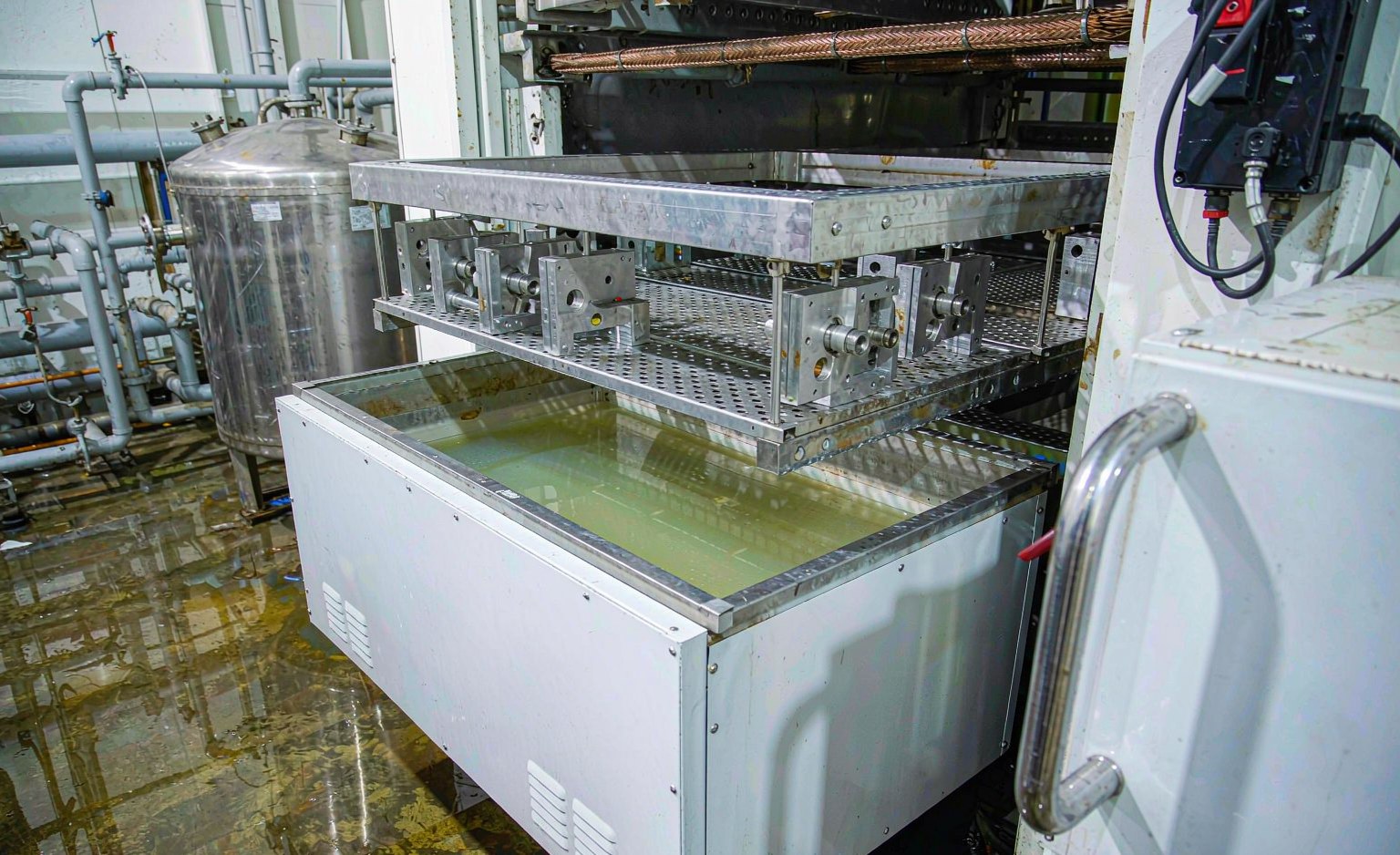
On an anodizing line, the rack contact points define where the coating will be missing. That is a question for the quotation stage, not for the first incoming inspection.
Passivation: removing free iron from stainless steel
Passivation does not add a layer. It removes free iron and contamination from the surface so that chromium can re-concentrate and the alloy recovers its own corrosion resistance. Dimensions do not change and appearance changes little. Standards commonly cited are ASTM A967 or ASTM A380, in nitric or citric chemistry.
It is required after welding, after machining with iron-bearing tooling or in contact with carbon steel fixtures, and on any stainless part that must pass a salt spray test. It can be skipped on purely decorative parts in dry indoor service with no risk of iron contamination.
Powder coating: thick, weather resistant, heavy on masking
Film thickness is typically 60 to 100 µm, several times that of anodizing. The benefit is weather resistance and colour freedom, with polyester systems common outdoors. The cost is that every fit has to be recalculated: threaded holes, precision bores, conductive surfaces and grounding points all need masking, and masking is manual labour.
One point that is easy to overlook: a coated part cannot be repaired locally without a visible trace. Rework means stripping and recoating, and stripping carries distortion risk on thin walls. Colour and batch should therefore be settled once.
| Process | Substrate | Typical film | Changes size | Masking | Best for |
|---|---|---|---|---|---|
| Sulphuric anodizing, Type II | Aluminium alloys | 10 to 25 µm | Adds 5 to 12 µm per surface | Mating bores, threads | Corrosion plus appearance |
| Hard anodizing, Type III | Aluminium alloys | 25 to 50 µm | Adds 12 to 25 µm per surface | As above, larger stock | Wear surfaces, sliding faces |
| Passivation | Stainless steel | No measurable build | No | None | After welding, salt spray specs |
| Powder coating | Most metals | 60 to 100 µm | Yes, by film thickness | Threads, bores, grounding | Outdoor, visible parts |
| No finish | Any | None | No | None | Internal parts, later machining |
The four things that actually drive cost
- Number and position of rack marks. More points and stricter positions mean longer loading time and more rework.
- Masked area. Masking is manual. Once a part has a dozen threaded holes, cost climbs quickly.
- Colour and minimum batch. A special colour means a dedicated bath or a dedicated powder change, and small quantities carry that setup.
- Rework is largely irreversible. Oxide and coating must be stripped before redoing, and stripping carries distortion risk on thin sections.
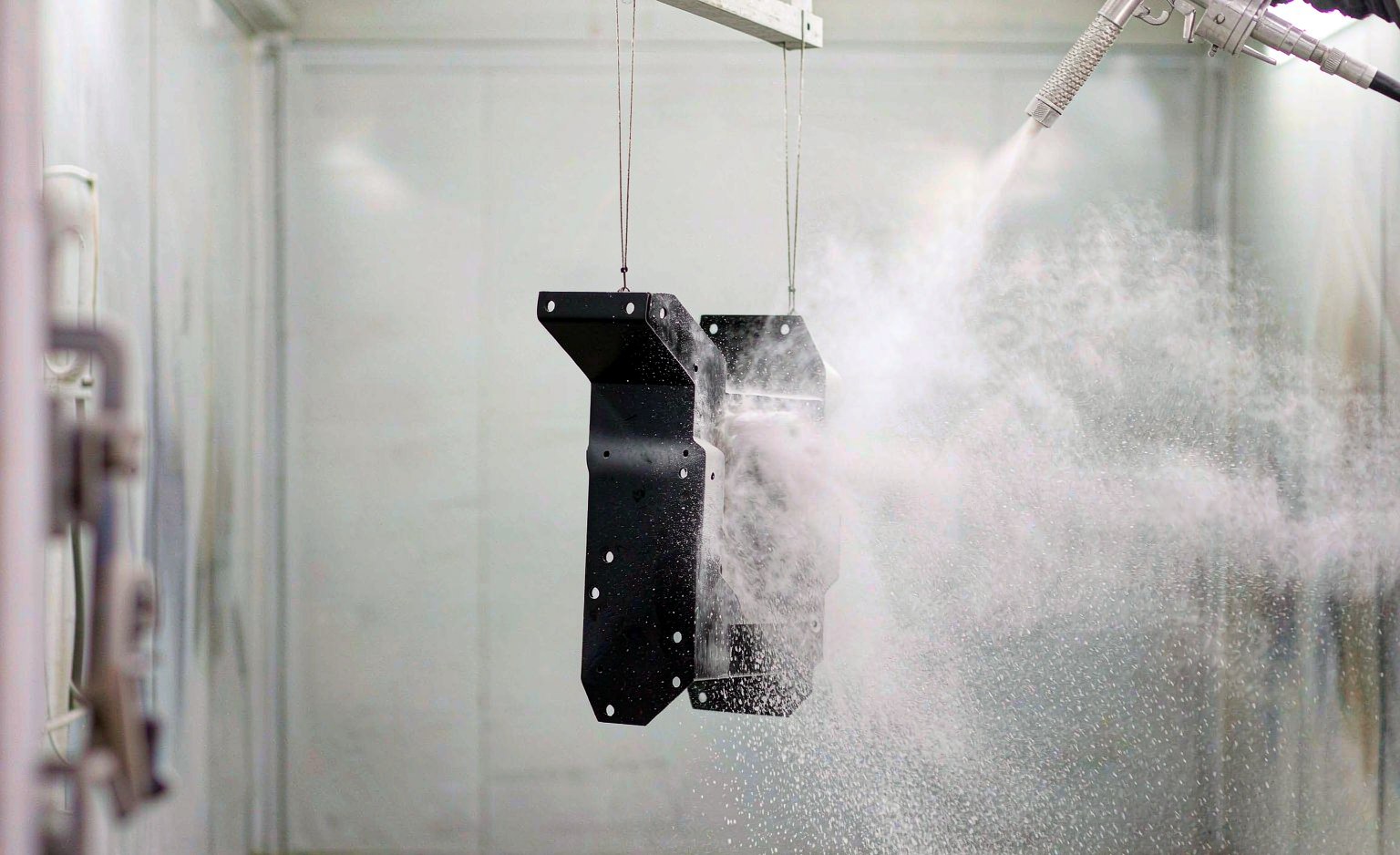
Coating builds far more than anodizing, and the price is that every thread and every mating bore has to be masked first. Masking volume shows up directly in the quotation.
How to write it on the drawing
One executable note is worth ten adjectives. Four elements are enough: process, standard, film thickness, colour and masking.
For anodizing: "Anodize, Type II, 15 to 20 µm, black, mask 12H7 mating bore and M6 threads". For passivation: "Passivate per ASTM A967, citric chemistry". For coating: "Powder coat, polyester, 70 to 90 µm, specified colour, mask threads and grounding studs".
A checklist before releasing the drawing
- Do substrate and process match? Anodizing belongs on aluminium, passivation on stainless.
- Is the film thickness stated, and is there stock on the mating dimensions?
- Are the faces, bores and threads that must be masked identified?
- Are permitted rack mark locations and counts stated?
- Is the colour standard or special, and does the batch size justify it?
- Are there salt spray or weathering requirements, and is the test standard named?
- Are the surfaces that must conduct or ground excluded from the coating?
The last point is the one most often missed. On a coated enclosure, a painted grounding stud can become the reason an EMC test fails.
Write these down and quotations become noticeably more consistent, because the supplier no longer has to price a safety margin for "unclear whether this needs masking".